Malaysia a Christian Nation?

What do I think? What do you think I think? I am a Muslim. So again, what do you think I think? A yes? No?

Fiqh Medic

What are the legal maxims of Islamic Law (QAWA’ID FIQHIYYAH). Let's say, if a patient is having a colostomy bag (which contains his urine or feces), would the ablution be valid? How about, if a women is in labour (bear in mind that giving birth to the first child can be as long as 19hours); can she still performs Salah? (Let's find the answer here.)

Men VS Women

Let's think critically. Who is the one which better in governing this world!? Men, who have more influencing and have strong character or women, who have emotional values, and boundless cares and love?

Are You Ready to Fall in Love??

What is love to begin with? we might assume that we have that sort of wonderful love, unshakeable by no others even death. We may sacrifice anything to our beloved person. But, if we claimed that we love Rasulullah, where are the proofs? You are willing to sacrifice anything for his sake?

Does God need us?

Now, tell me, what are the differences between this human-made lego tree and the one who created by our almighty creator,our god?

Friday, July 27, 2012

Are You Ready to Fall in Love??


Assalamu’alaikum wbt 
“Your face was brighter than the sun
Your beauty equaled by none 
You are Allah’s Chosen One 
Muhammad Khaira Khalqillah...”
We all know this song. We have already memorised the lyric by-heart. Some of us might even go as far as re-playing the music video spontaneously in their brains scene by scene whenever the song is on the radio. This song, without doubt is a good song. A wonderful wasilah or approach to attract modern audience especially the younger generation to know more about the personalities and character of our beloved Prophet Muhammad peace be upon him. Sometimes, we whine, why do youngsters nowadays know more about singers, pop stars and celebrities more than they do of Rasululllah? Isn’t Rasulullah the one we Muslims should idolised? Isn’t his the kind of lifestyle and personality we should look up to? Isn’t he the best of mankind? 

Please, do not put the entire blame on them. The reality of today’s so-called modern world which prioritizes hedonism over anything else does not seem to help the young muslims to truly adore the Prophet. The slanders and propaganda made by the Western media in effort to jeopardise the image of Rasulullah further exacerbates the situation. But hang on, before we start wildly pointing our fingers and blame the West for everything, let’s look at ourselves and reflect. Do we really know Rasulullah? When we say “Your beauty equalled by none”, do we really mean it, or is it just because the words are there in the lyric? How do we know he is indeed wonderful? Have we met him? Do we really love him? How do we love someone without knowing how he looks like, how his voice sounds like, how he speaks, how he eats, how he treat others? Imagine falling in love with the air. How can you develop feelings for an entity you cannot even visualise? And, true indeed that the key to love is none other than understanding. 

Is there any way we can understand Rasulullah? Of course there is. Like the saying goes, whenever when there is the will, there is the way. Apart from our main source, al Kitab al-Quranul Karim, there are numerous hadiths depicting the personal life of Prophet Muhammad s.a.w. In this humble, short article, I would like to introduce you to an interesting work written by Imam Tirmizi radhiallah Anhu. The title is simple, yet meaningful - Syamail Muhammadiyah. Literally it means ‘the Characteristics of the Prophet’. This book presents in great details of how Rasulullah physically looked like, his behaviour, his lifestyle down to his favourite perfume and his preferred types of food. Also included in this wonderful log are the kinds of ibadah the Prophet pbuh frequented, his other names and a brief discussion of his entire life from birth till his last day. Now, are you ready to explore the personality of Prophet Muhammad sallallahu 'alaihi wasallam and along the way, fall in love with his beautiful way of life? I take that as a perfect ‘yes’. 

How Rasulullah sallallahu 'alaihi wasallam looks like? Is he good-looking? Well, it is undeniable that the Prophet was indeed one of the most eligible bachelors among his people. As narrated by a companion Al-Bara’ bin Azib r.a., 

“ Rasulullah was a man of average built ( neither too tall nor too short), the distance between his two shoulders was wide ( his shoulder was broad). His thick hair fell down to his ears. When he dressed in red, I had never seen anyone as handsome.” 

Saidina Ali bin Abi Talib Karamallahuwajhah, the Prophet’s cousin who was also Rasulullah’s son-in-law described Rasulullah’s physical look in a very detailed manner. 

“Rasulullah was not too tall nor he too short. He was a man of average height among his people. His hair was neither curly, nor was it plain straight but in between. He did not have a very fleshy face, neither was it completely round, rather it was only slightly so.” 

He further added, “He was white skinned, having a reddish tinge. His eyes were large with jet black pupils and his lashes were long. His joints were large as was his upper back. He did not have hair all over his body but had a line of fine hair extending from his chest to his navel. When he walked, he would walk briskly as if descending a slope. When he turned, he would turn his whole body and between his two shoulders was the Seal of Prophethood ( khatamun-nubuwwah ).” 

On Rasulullah’s social life, he narrated, “He was the Seal of the Prophets; he had the most giving of hearts; he was the most truthful of people, the best of them in temperament, and the most sociable amongst them. Whoever unexpectedly saw him would stand in awe of him and whoever accompanied him and got to know him would love him. Those who described him would say, ‘I have never seen anyone, before him or after him, who was comparable to him.” 

Adding to Messenger of Allah’s fine features was a description by Jabir bin Samurah r.a, “I saw the Rasulullah, sallallahu alayhi wa sallam, on a clear night wearing a red dress and I paused and looked at him and then the moon and found that, in my view, he was more beautiful than the moon..” 

Physical aside, let’s look at Rasulullah’s preferences in daily life. The Ummul-Mukmineen Ummu Salamah r.a. stated that the Prophet’s most preferred clothing was the qamis. Asma’ bin Yazid further related that the sleeves of Rasulullah’s qamis reached his wrists. Anas bin Malik r.a said, 

“The sheet (body wrap) most liked by Rasulullah sallallahu alayhi wasallam was Al-hibarah ( a Yamaani printed sheet made from cotton)." 

Apart from qamis, Rasulullah was also reported of putting on other types of garments as reported by Aisyah r.a. , “Rasulullah once left the house in the morning, wearing a sheet made of black fur.” Mughirah bin Shu'bah stated that at the time of Ghazwah Tabuk, Rasulullah wore a Roman jubbah with narrow sleeves. Regardless the types of clothing, Rasulullah always express his gratitude to Allah subhanawataala. Abu Sa'id al-Khudri r.a recalled, 

“When Rasulullah s.a.w put on a new garment, he would in happiness mention that garment's name, such as turban, qamis or sheet. Then, he would recite the du’a: 

'Allahumma lakal hamdu kama kasauw- tanihi, as-aluka khayrahu wa-khayra ma-suni'a lahu wa-a'u- dhu bika min sharrihi wa-sharri ma-suni'a lahu'. 

“Oh Allah, all praise and thanks to You for clothing me with this (garment). I ask You for the good of it and the good of what it was made for, and I ask Your protection from the evil of it and the evil of what it was made for.” 

Prophet Muhammad s.a.w loved to apply kohl on his eyelids, and the type of kohl he preferred the most was ithmid. From Ibnu Abbas r.a., Yazid bin Harun said, 

“ Rasulullah had a container for kohl he applied every time he went to bed, three times on each eye.” 

As reported by Jabir bin Abdullah r.a., Rasulullah encouraged applying kohl on the eyes as it brightens the eyesight and facilitates the growth of eyelashes. As for shoes, Rasulullah once had a pair of jet-black shoes given to him by King an-Najasyi. When he took wudhu’ Rasulullah just spread some water on the shoes. Rasullah also wore sandals. As narrated by Aisyah r.a., Rasulullah always liked to begin with the right while combing his hair, while putting on his sandals and while performing wudhu’. 

It is interesting to know the type of food that the Messenger of Allah consumed. Ummul Mukmineen Aisyah r.a. recalled that, “the family members of Rasulullah s.a.w never eat wheat bread till full for two consecutive days until his demise.” Ibnu Abbas added, 

“ Rasulullah and his family once had to endure starvation for several nights as they were out of food. The type of bread they ate was bread made of wheat called sya’ir. 

Sya’ir was a type of wheat bread of lower quality compared to other types of bread. From Aisyah r.a., it was known that Rasulullah liked vinegar and recommended olive oil in food and cooking. 

Anas bin Malik r.a related, “Rasulullah liked pumpkins. When food was served or when there was any invitation, I would follow him and served him the pumpkins as I knew he loved them.” Anas bin Malik also narrated in another hadith how he saw Rasulullah s.a.w was looking for pumpkins in his plate. In addition to those, Aisya r.a. described the Prophet’s liking for halwa’ (sweet things) and honey. A hadith from Abu Hurairah r.a. described a very interesting preference of Prophet Muhammad s.a.w. 

“ Rasulullah was once served a meat. The forequarter (the leg portion) of the meat was given to him. It was his favourite portion. Therefore he ate it.” 

As for drinks Aisyah r.a. reported that Rasulullah liked sweet and cold drinks. =) 

I leave the rest of other beautiful and interesting characteristics of Rasulullah for you to unravel from the book. There are numerous other facts about our Prophet that majority of Muslims do not know and supposed to be highlighted. I believe that as you journey through the pages of this book, you can slowly beginning to see the Messenger of Allah from a new, better perspective. Learn about him, know him, understand him, see the world as he saw it, and live the life as he lead it. In the meantime, keep your heart widely open to fill it with your love for him. At the end of your reading, you may, insya-Allah have Rasulullah s.a.w in a special place inside your heart. All due to blessings from Allah the Almighty. Before I end this simple article, I would like to deeply apologize for the slightly misleading title. As you can see, there is nothing related to munakahat in this article. Now, I challenge you to pick up this special book, Syamail Muhammadiyah by Imam Tirmizi and ask yourself – ‘ Are you ready to fall in love?’ 

Written by, 

Pink Marshmallow,
Msoc Comittee 2011/12,
July 7, 2012
based on Syamail Muhammadiyah by Imam Tirmizi, PTS ISLAMIKA Sdn Bhd, 2011. 

Footnote: 
- The song lyrics at the beginning of the article is from the Chosen One by Maher Zain. (in case there are people who don’t know…) 
- Ghazwah Tabuk: Battle of Tabuk 
- Kohl: a type traditional cosmetic, similar to eyeliner. (in BM: celak..) 
- Qamis: the Arabic dress, jubbah, similar to shalwar kameez 
- halwa’ or halva: sweets made from honey or dates.

Tuesday, July 10, 2012

Estawoo!


Nowadays, when people talk about Islam, they will always associate Islam with terrorism and a religion which oppress its believers especially the women. The truth is, Islam is a beautiful religion and it is like a manual on the way we should lead our lives. However, because of the propaganda made by the West, people only see Islam as they see it now. But, in a program called ONE FAMILY on MAJD channel, the beauty of Islam was potrayed when the speaker, Dr.Yahya Alyahya (head of the CALL to Islam Committee) shared his story.

Dr. Yahya Alyahya said that Muslims are never disorganized; they just need to be CONVINCED. Then he told a story of a non-muslim American who was discussing with him about Islam while watching a live broadcast of Isha’ prayer from Makkah.

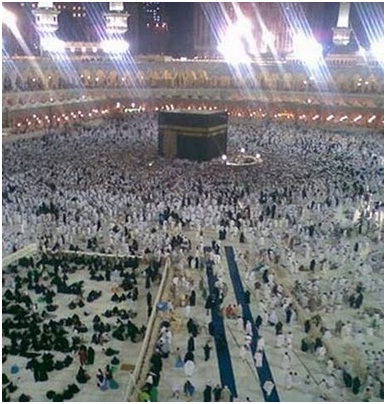
The American man was so amazed of how crowded was the masjid, more than 3 million Muslims were there at the last nights of the holy month of Ramadan, so crowded, so disorganized and scattered everywhere around the mosque.

The sheikh then asked the non-muslim man, “How long do you think they'll take to organize themselves in rows and start the Salaat?”

The man answered, “At least 2-3 hours”.

Then the sheikh said, “But the masjid (HARAM) of Kaaba has 4 floors”.


The man said, “Oh, this will make it about 12 hours then”.

The sheikh said, “Put in your mind that they are from countries all over the world with different languages”.

The American man said: “THEN IT'S IMPOSSIBLE TO ORGANIZE THEM BY ANY MEANS!!”

Then the Salaat time came, and Sheikh Sudais of Makkah stood up and said, “ESTAWOO” (Arrange yourselves).


And within seconds, the whole scene changed and the crowd of 3 million Muslims arranged themselves in well-organized rows in NO TIME ! 


The American man stared at the TV screen for a moment, and then said:

ASH-HADU ALLA ILAAHA ILLA ALLAH WA ASH-HADU ANNA MOHAMMADAN RASULULLAH. 


By:
Lilac Girl
Msoc Committee 2011/12

Monday, July 2, 2012

Naseehah vs. Humiliation


"O you who have believed, let not a people ridicule [another] people; perhaps they may be better than them; nor let women ridicule [other] women; perhaps they may be better than them. And do not insult one another and do not call each other by [offensive] nicknames. Wretched is the name of disobedience after [one's] faith. And whoever does not repent - then it is those who are the wrongdoers."

"Wahai orang yang beriman! Janganlah suatu kaum memperolok-olokkan kaum yang lain, boleh jadi mereka (yang diperolok-olokkan) lebih baik daripada mereka (yang memperolok-olokkan), dan janganlah pula wanita-wanita (memperolok-olokkan) wanita-wanita lain, boleh jadi mereka (yang diperolok-olokkan) lebih baik daripada mereka (yang memperolok-olokkan), dan janganlah kamu mencela diri kamu sendiri, dan janganlah kamu panggil memanggil dengan gelaran yang buruk. Seburuk-buruk nama (panggilan) ialah (panggilan) yang fasik (jelek) sesudah iman, dan sesiapa yang tidak bertaubat, maka mereka itulah orang yang zalim."

Al-Hujurat [49:11]


I guess many of us have already recited or listened to the verse above, and have understood its meaning thoroughly and I believe those who understand the verse is better than me. Insha’Allah.

Let me begin with one best example of the situation relating to this. Someone once asked me did Al-Quran ever mention anything about sticking up for not only religion but for yourself? Because when someone puts you down or say anything about you that clearly not true, should you just ignore it or stand up and defend yourself? So, what should you do? 

First of all, let me emphasize a little bit about the idea of this verse. From my own perspective, there are two groups of people, one who ridicule and insult others, and the other who are being ridiculed and insulted. Islam does not discourage sticking up for yourself in any way, however one should not curse, or shout or speak with anger in retaliation, as that will just be sin for you. Think of what’s in your best interests, if people are not treating you respectfully, then it’s probably best to avoid them and to try and not be around them, or give them advice, in a CALM MANNER (do not advise them with humiliation! Whether you realise it or not, hurting people feeling will not do any good but harm, informing them that what they are doing is not correct in the way that Islam has told us. By HIKMAH.

So, How to advise (naseehah) with HIKMAH? 


1. Seeking the Pleasure of Allaah by giving Naseehah 
It is necessary that a person has the intention of seeking the pleasure of Allaah when giving naseehah. Only such an intention deserves reward from Allaah and acceptance from His slaves.
If the intention is other than that, then that person deserves the anger and wrath of Allaah as well as the hatred and rejection of the people - including the one being advised.

2. Not slandering the one being advised
This is an affliction that has befallen many Muslims. Many times, after taking a closer look, we find that the person giving naseehah actually wants to slander the person he is advising because of personal hatred. This does not befit the one being advised and may lead to a worse situation with no benefit resulting from the naseehah.

3. Naseehah is to be given in secret
Naseehah is most likely to bear its fruit when given to a person when he is by himself, for in such a situation the person is less likely to be affected by the thoughts of others. The sincere advisor should not aid the Devil over his brother by publicly rebuking him and letting Shaitaan beguile his brother into not taking the naseehah. This closes the doors of goodness and acceptance, and reduces the chances of the naseehah from being accepted.
This is why our pious predecessors used to give naseehah in secret.
Hafidh Ibn Rajab writes, "When the righteous predecessors intended to give naseehah to someone, they admonished him privately, to the point that some of them said, "The one who exhorts his brother between him and himself , then it is naseehah. The one who exhorts him in front of people, then it is merely scolding!"
Fudail Ibn Ayyadh, one of the pious scholars from our predecessors, said, "A believer covers up and gives naseehah, whereas an evildoer exposes and humiliates." Ibn Rajab commented on Fudail's saying, "It is naseehah if it is with a cover, while humiliating is with broadcasting".

4. Naseehah is to be given with kindness, gentleness and softness
A sincere advisor must be kind, soft and well-mannered in giving naseehah to others, as this might get the desired response from the one he is advising. One must understand that accepting naseehah is like opening a door, and that the door will not open without the proper key. The one who is given naseehah has a heart that has a lock in some matter - for he has abandoned something that Allaah has demanded from him, or has committed something that Allaah had forbidden him from. There is no better key to unlock the heart than kindness in giving advice, gentleness in exhortation and softness in speech as the Prophet (peace be upon him) has said, "Kindness is not to be found in anything but that it adds to its beauty, and it is not withdrawn from anything but it makes it defective." [Muslim]

5. Choosing the proper time to give Naseehah
The one giving naseehah must choose the right time to give his advice, since a person is not always ready to receive naseehah. A person may be angry about something, upset about not getting what he wanted, grieved for something he may have lost, or there may be some other reason that might prevent him from responding to the naseehah.
Abdul Hamid Bilali writes, "Choosing proper time and place is one of the greatest causes for the acceptance of naseehah and eradicating evil", and as Abdullah Ibn Mas'ud said, "Hearts (sometimes) yearn and are attentive, but (sometimes) they go through lapses and feed repulsion. So take from them when they are (in a state of) yearning and are attentive, and leave them alone when they go through lapses and are feeling repulsion".
However, Islam encourages us to forgive and forget rather than to hold resentment and grudges in our hearts, as we know that this life is temporary and justice will be given in the hereafter.


"And the retribution for an evil act is an evil one like it, but whoever pardons and makes reconciliation - his reward is [due] from Allah . Indeed, He does not like wrongdoers."

"Dan (jika kamu hendak membalas maka) balasan sesuatu kejahatan ialah kejahatan yang bersamaan dengannya; dalam pada itu sesiapa yang memaafkan (kejahatan orang) dan berbuat baik (kepadanya), maka pahalanya tetap dijamin oleh Allah (dengan diberi balasan yang sebaik-baiknya). Sesungguhnya Allah tidak suka kepada orang-orang yang berlaku zalim."

Ash-Shuuraa [42:40]


May this sharing benefits us all. Insha Allah. 

By:
Aishin,
Msoc Committee 2011/12

Wednesday, June 6, 2012

A Muslim. A Student. A Muslim Student.


Students’ goal, no doubt, is always to succeed whatever there is to come in schools, or more suitable to our condition, university years. Give theory examinations, dissection of the book begins from cover to cover. Give practical examinations, endless visits to the skills centre start and continue until the last minute. Give sets of quizzes, lecture notes are screened through thoroughly with every little details taken into attention.

GREAT! TWO THUMBS UP, YOU ARE SERIOUS IN YOUR STUDIES! :)

Usually, these students are the apples of lecturers’ eyes. The ones seen as hardworking, determined, not afraid to ask and clarify, etc. These, my friends, are crucially essential for survival in university style of learning, especially the ones involving healthcare courses. But with this comes the curious question of how the success here will be able to sustain whatever there is to come in the post-student life. This may be in working life, or merely in daily life, as a normal human being with the white coats and medical tags off.

THEN, HOW?

Now, before exploring on the ‘how’, why not we look into the ‘why’ at a glance. Into the need of becoming successful. See, as all of us are constantly being reminded, Allah has sent us to His earth no other than to worship Him (Az-Zariyaat: 56), and to be a caliph (Al-baqarah: 30). So, having these in mind, we are all set to venture into our own determined fields and professions. With proper intentions (niat) of submitting whatever we do as ibadah, and with high determination to represent and bring the message of Islam, we need to instil in mind that we have to be successful. We need to portray a good image to everyone, that practicing Muslims are the ones who everyone wants to be. In spreading the message of Islam, this is one of the most powerful factor that must be worked on.

Therefore, now is the discussion on ‘how’. Coming to this, there are actually no specific guidelines which can pinpoint and direct anything or anyone towards success. It is a subjective journey really, and going to the dynasty of success requires continuous exploration of self-potential. However, there are some practical things which may help to boost our potential, and mind you, the points in the later discussions have nothing to do with formal studying. For that part, everyone is sure to have achieved ample motivation to keep the engine going. But the list and discussions below are more focused on how to create some add value within us, which will contribute to the build up of strong characters insyaAllah. Ready for the ride? Now, here we go.


Bismillahirrahmanirrahim.

Point 1
Get involved in community-oriented activities, give endlessly.
Apart from learning how to interact with people, it also opens up our views on many things. Being in other people’s settings will teach us to be humble and thankful at the same time, with all the nikmah Allah has given us, even without us asking for them. Through these realisations, it is indeed a wonderful feeling to note that there is this one silent but pleasant push factor for us to keep on contributing to the society. We will no longer find any burden at all in giving. In fact, it is quite appropriate to put the word ‘addiction’ to explain the feeling we will get after these kinds of activities. Amazingly, as we keep on giving, with Allah’s rahmah and rahim, we get a lot more in return. Not that we asked for it, but due to His endless love towards His servants, that is what has been promised to us. Allahuakbar!

Point 2
Play sports, get healthy.
Health, when presented together with sports, is almost always related to physical well being. True, it is one of the most prominent things incorporated in sports activities. However, it is actually much more than that. With smaller scale realisation, social health is another entity that follows very closely. By playing sports, we will be able to know how a team works, and how role-playing is important in ensuring success. It is undeniable that we can learn all these things by doing other things as well, but hey, why don’t we want to get two things (physical and social health) in one go. After all, combos never fail to grab our attentions right? ;)

Point 3
Travel and explore the world.
Doesn’t need to be far. Exploring the kampung next to ours can also be counted. Just, go out and explore whatever the world has in store for us. Learn people’s tradition and lifestyle in different settings. Learn what Allah has sent to other places, and how the local community react and cope with it. Learn how strong people can be in facing various challenges that come endlessly in their lives. Learn history of places and their people back then and now. Just, go out and learn.

‘Do they not travel through the land, so that their hearts (and minds) may thus learn wisdom and their ears may thus learn to hear? Truly it is not their eyes that are blind, but their hearts which are in their breasts.’ (Al-Hajj: 46)

Learn as much as possible, and tag it along with dua’ that whatever is seen and experienced will be able to open our hearts and soften them to fathom Allah’s lessons and greatness, insyaAllah.

Point 4
Be daring, receive challenges.
Opportunities are everywhere. It is just the matter of us opening our eyes widely to grab them. Sometimes they come to us, asking for their puzzles to be solved. Sometimes they are just hibernating quietly, waiting for anyone to come and trigger the golden lessons they have in store. They can be in any form, anything at all. Take group presentations as a simple example. Sometimes we can be pointed to be the presenter, and sometimes the post can be opened to anyone who is willing to commit. Whichever case it is, agree, volunteer, take the challenge and be ready to face whatever that comes together with it. We will never know our full potential until we break through our comfort zone. Dragonflies will be sprinting inside our tummies when it is time for the real deal, but hey, how do you think great speakers feel when they started off with their first speech? ;)

Point 5
Have quality dates with Him.
All in all, after long hours of working hard to achieve success, it is always a relaxing moment to spend some time with Him. Happiness, share with Him. Sadness, cry to Him. Problems, report to Him. He has allocated for us a rigid 5 times a day to listen to whatever we have to say. That, plus promises of rewards to those spending extra. Subhanallah, what more can we ask for from The Creator, who only asks us to worship Him and be His Caliph, but gives endless rewards to us in return. Indeed, in the remembrance of Allah does the heart find peace.

Plus, where else can we ask for strength, if not from The One who made us, and The One who knows every detailed physiology inside us? Strength to achieve whatever we have discussed earlier, in our pursue of becoming a great Muslim in the society. Strength to deny the beauty of this temporary world in order to seek for His blessings here and the hereafter. And strength to maintain our intentions in the right path in everything that we do. After all, prayers are the most powerful weapon for all mukmineen and mukminaat. :)
*******************************************

Alhamdulillah, those are the 5 practical points which insyaAllah will help to dig the best quality out of us, to be further polished and shone. But these are nothing if our attitude is putting a huge barrier from the exciting exploration within ourselves. Yes, in the end, it is back to the ATTITUDE. Get that right, and insyaAllah other things follow with ease. How to get it right? Just, be excited to explore new things. Seek, seek and seek endlessly. We will be surprised with the journey, as well as the outcome of it. :) These, together with the basic knowledge we have been grilled with in the university, will insyaAllah boost our potential up, and help in our journey of becoming a great Muslim which will direct to fulfilling our purposes of life.


ALL THE BEST EVERYONE! :)


By:
DocDot
Msoc Comittee 2011/12

Wednesday, May 30, 2012

Orang Kaya Sahaja Masuk Syurga


Bismillahirrahmanirrahim.
Assalamualaikum.

1. Saya bukan orang kaya. Saya amat takut kalau hanya orang kaya masuk syurga. 

2. Sebab saya tak tahu, mampu atau tidak saya menjadi kaya.


3. Tapi usaha itu penting. Kita tak disuruh meninggalkan dunia. Kita diminta mengambil sebahagian daripadanya.

4. Bezanya, yang di dunia itu kita hanya jadikan alat. Untuk membantu mencapai matlamat yang tepat. Yakni kesejahteraan dan kejayaan pada hari akhirat. Hari yang tiada hujung atau penamat.

5. Malah, setiap kali selepas solat, kita amat lazim membaca doa meminta kebaikan pada kedua-duanya, dunia dan hari akhir.


6. Maka, bukanlah Islam menuntut meninggalkan terus kekayaan dunia. Bahkan sahabat Nabi SAW yang digelar As-Siddiq pun seorang saudagar yang kaya raya. 

7. Beliau ialah Abu Bakar RA. Dan beliau dijamin masuk syurga!

8. Tunggu. Selidik dulu sirah. Tentang bagaimana Abu Bakar RA membelanjakan hartanya. 

9. Malah, tidak juga Islam menuntut kita 'mengejar' kemiskinan. Kerana bahkan kemiskinan itu kata Nabi SAW, boleh menyebabkan kekufuran. Wa na'uzubillahi minzalik.

"Hampir saja kemiskinan (kemiskinan jiwa dan hati) berubah menjadi kekufuran."
-HR. Ath-Thabrani-

10. Asalkan hati dan jiwa tak miskin dengan iman, insya Allah selamatlah kita daripada kekufuran. Ameen..

11. Tujuan sebenar penulisan ini adalah untuk mencadangkan para pembaca sekalian supaya membuat penilaian yang adil.

12. Pada pandangan saya (kalau tak setuju tak apa), seorang nelayan yang membantu orang lain dengan nilai RM1, lebih baik dan mulia daripada seorang jutawan dan hartawan yang membelanjakan hanya RM10 daripada hartanya.

13. Bukan nilaian yang menjadi persoalan sekarang. Tapi keikhlasan dan juga keadaan insan yang membuat kebajikan itu.

14. Kita tak boleh mengukur keikhlasan orang. Tapi bayangkan diri kita sebagai pelaku kebajikan itu, dan nilailah keikhlasan diri kita sendiri. Maksud 'keadaan' pula dalam konteks ini ialah kedudukan ekonomi seseorang.

15. Bayangkan seorang nelayan yang mempunyai 10 orang anak dan memperoleh tidak lebih RM1000 setiap bulan. Itupun tak menentu. Pada musim tengkujuh, mungkin langsung tiada pendapatan.

16. Maka RM1 itu cukup besar nilainya buat dia. Jika dia sanggup sedekahkannya, dia sudah tunjukkan satu bentuk pengorbanan dan jihad pada hartanya.

17. Berbanding dengan seorang jutawan, apalah sangat RM10 itu. Kalau nampak di tengah jalan pun mungkin tak heran. 

18. Bukanlah salah untuk menghulurkan RM10. Malah itu lebih baik daripada tiada langsung.

19. Namun jika mampu menderma RM1000, kenapa tidak? 

20. Dikhuatiri timbul di dalam benaknya, "Alah, yang penting aku dah sedekah." 

21. Atau "Eh orang dah bagi RM10 syukurlah ya, kan tak bagi langsung baru tahu."

22. Seolah-olah harta itu miliknya. Siapa yang tak bersyukur sekarang?

23. Alamak. Inilah kerdilnya saya. Perlukan ayat yang panjang untuk buat penjelasan di atas. 

24. Cuba baca Al-Quran. Kata-kata Allah ada sebenarnya menggambarkan hal ini. Cukup tepat, ringkas, padat dan kena pada maksud dan tujuan mesej itu disampaikan.

Firman Allah bermaksud: "Kamu sekali-kali tidak sampai kepada kebajikan (yang sempurna), sebelum kamu menafkahkan sebahagian harta yang kamu cintai. Dan apa sahaja yang kamu nafkahkan, maka sesungguhnya Allah mengetahui."
-Surah Ali-Imran: 92-

25. Demikianlah. Sudahkah kita mencapai tahap kesanggupan memberikan harta yang kita sayang kepada orang?

26. Bayangkan seorang miskin yang sangat gembira apabila kita hadiahkannya sepaket roti. Padanya mungkin, itu cukup berharga kerana sudah beberapa hari dia tak makan!

27. Bagi kita pula, bukan apa, roti tu dah nak sampai tarikh luput, daripada buang, kan ke lebih baik kita sedekah kat orang betul tak?

28. Alhamdulillah, baguslah bersedekah. Tapi cuba tanya balik, dalam kes ni, sayang tak kita pada roti tadi?

29. Astaghfirullah...

30. Berkenaan persoalan nelayan dan jutawan tadi, tidaklah saya mencadangkan bahawa menjadi nelayan lebih baik (melainkan dalam konteks sebenar yang saya sampaikan).


31. Bahkan bukankah jika kita banyak harta, lebih banyak manfaat boleh kita berikan pada orang sekeliling kita dek kemampuan dan kekayaan kita? 

32. Benar sekali. Cuma, jangan terlalu yakin. Tak ramai orang apabila kaya, pikirannya sama ketika dia masih 'miskin.' Anggaplah penyataan saya itu satu bentuk metafora, yakni satu perlambangan, atau simbolik.

33. Yakni dalam hidup ini, kita kadang-kadang (secara simboliknya) boleh menjadi seorang nelayan dan pada waktu yang lain menjadi jutawan pula. Pendek kata, kadang-kadang hidup senang, kadang-kadang sedikit malang.

34. Soalnya adalah, adakah kita mengelak berbuat baik jika kita dalam kesusahan? Padahal ketika susah itulah, pahalanya insya Allah lebih besar, dek perassaan berat dan perlunya 'jihad' untuk membuat baik dalam keadaan begitu.

35. Sebenarnya, sebelum saya terlupa, saya bukan sahaja nak bercakap tentang sang penderma atau yang menolong.

36. Saya rasa lebih penting juga, kita membayangkan diri kita sebagai seorang yang menerima derma atau yang ditolong.

37. Kadang-kadang kita jarang menghargai bantuan dan pertolongan orang pada kita.

38. Tanpa pula kita melihat kepada kesusahan yang dilaluinya.

39. Saya bagi satu contoh mudahlah untuk gambaran kita ya.

40. Pernah tak bila kita nak pergi ke mana-mana, ada sahabat kita datang ambik kita dengan kenderaan mereka?

41. Cuba ambik dua situasi. Kawan kita Man dan kawan kita Zack.

Situasi satu: Rumah Man

42. Kita nak ke rumah Man. Sampai di stesen LRT, Man datang ambil kita dengan motorsikal buruknya. Waktu tu hari hujan. Man berikan pada kita baju hujannya.

43. Sebab dia boleh tukar pakaian bila sampai rumah. Kita tidak. Tapi sampai di rumah, semestinya, ada la sikit basah-basah di badan kita kan? Mungkin kita pun merungut dalam hati. Tapi Man pula, basah kuyup letup tup tup..

Situasi dua: Rumah Zack

44. Kita nak ke rumah Zack, seorang anak jutawan. Sampai di stesen LRT, Zack datang dengan kereta Ferrarinya. Eh silap, kereta ayahnya.

45. Bukan dia pun yang memandu. Ada driver peribadi. 

46. Hari itu hujan juga. Namun kita sampai ke rumah tanpa setitik pun air hujan kena pada baju kita. Cuma mungkin beberapa titik air liur kerana terseliur dan tergamam pertama kali naik kereta Ferrari.

Man lebih baik atau Zack?

47. Baik. Masa untuk penilaian sekarang. Kalau kita 'cacat' dalam menilai, pasti kita lebih menghargai Zack.

48. Lebih selesa, malah mengiurkan!

49. Tapi siapa yang harus lebih dihargai dalam hal ini?

50. Saya harap mesej saya sampai- tentang bagaimana kita betulkan cara kita menilai dalam menghargai sumbangan dan bantuan orang. Bukan sekadar pada kadar dan bentuk bantuan yang diberikan, tetapi juga mengambil kira 'keadaan' sang pemberi bantuan itu.

51. Sebagai penutup, sekali lagi saya mahu mengulangi mesej yang sama namun menggunakan contoh dan sisi pandang yang berbeza.

52. Umumnya, dalam dunia sekarang, siapa yang paling kaya harta dunia? Orang Islam? Tidak, bukan?

53. Jika orang bukan Islam yang kaya raya ini banyak menderma dan membuat kebajikan, pertamanya kita memohon agar Allah SWT melapangkan hatinya untuk menerima hidayah, agar segala amalnya diterima Allah SWT.

54. Namun bagaimana pula yang kaya raya dengan jalan menipu dan menjadikan amalan kebajikan dan dermanya hanya sebagai penutup kejahatannya? Mengaburi dan menyembunyikan kezalimannya?

55. Mana nilainya kebaikan mereka tanpa bersaksi bahawa Allah lah Tuhan mereka?

56. Sebab itu, jangan kita dikaburi mata dengan fitnah kekayaan ini. Sedangkan Al-Masih Al-Dajjal pun menggunakan taktik yang sama. 

57. Mendatangkan apa yang indah pada mata, tapi jahat pada intipatinya. Dunia menjadi taruhan. Akhirat dilupakan, ditinggalkan.

58. Demikian juga kita di Malaysia. Ya, kita bersyukur jika ada ramai dermawan. Tetapi berhati-hatilah dengan musang berjanggut. Janggutnya itu bukanlah sunnah!

59. Maksud saya, ada orang yang menjadikan hartanya sebagai alat menyembunyikan kejahatannya.

60. Jika menipu untuk mendapatkan wang, usahlah berterima kasih atas wang yang dia sumbangkan.

61. Begitu juga dalam menilai isu politik.

62. Jangan sekadar melihat habuan dunia sebagai kebaikan orang. Ada masa kebaikan itu adalah kewajipan pemerintah.

63. Kita bersyukur atas pelaksanaan tanggungjawabnya, bukan atas dasar 'pengorbanannya' pada rakyat.

64. Malah lebih teruk jika tanggungjawab itu dianggap sebagai satu bentuk 'hadiah' daripada diri mereka sendiri- sedangkan harta itu milik Allah, atau jika di dunia, milik negara dan rakyat, bukanlah mereka punya pun.

65. Berhati-hatilah ya? Telitilah dengan mata hati, jangan biarkan ia mati.

66. Firman Allah SWT dalam Surah Al-Kahfi, ayat 103-104 maksudnya:

"..............Apakah perlu Kami beritahukan kepadamu tentang orang yang paling rugi perbuatannya? (Yaitu) orang yang sia-sia perbuatannya dalam kehidupan dunia, sedangkan mereka sangkakan telah berbuat sebaik-baiknya."

67. Untuk tahu lebih lanjut siapa golongan yang rugi walaupun banyak buat baik ini, anda bukak Al-Quran dan sambung baca ayat yang berikutnya.

68. Saya tak nak tulis di sini sebab 3 perkara. 1) Sebab panjang sangat, 2) Sebab ini blog saya ikut suka hati sayalah! Jelez? Nak gaduh? (Baik yang ini gurauan sahaja ya huhu) dan 3) Supaya sekurang-kurangnya anda ada sebab untuk ambil wuduk dan baca Al-Quran.

69. Sekian sahaja untuk kali ini. Maafkan saya jika ada silap di mana-mana, mohon teguran daripada kalian.

70. Saya tinggalkan anda semua dengan satu hadis yang cukup awesome di bawah. Dalami dan selamilah maksudnya. Allahuaklam. Wassalamualaikum wbt.

Daripada Ibnu Abbas dan ‘Imran bin Hussain r.a, bahawasanya Rasulullah SAW telah bersabda: “Aku melihat ke dalam syurga, maka aku dapat melihat kebanyakan penghuninya adalah terdiri daripada kalangan orang-orang fakir miskin. Dan (apabila) aku melihat ke dalam neraka, maka aku dapat melihat kebanyakan penghuninya adalah terdiri daripada golongan perempuan.” 
-Hadis riwayat Muttafaqun ‘alaih-

71. Tidak, bukan orang kaya sahaja masuk syurga. Bahkan lebih ramai daripada yang miskin.

72. Yang tahu membezakan apa FUNGSI dunia, apa pula STATUS hari akhirat.

73. Moga Allah SWT membantu kita mengenal pasti dengan tepat: mana satu alat, mana satu matlamat.

Ameen ameen ameen~

Diconteng oleh:
Ex-IMU

Saturday, May 12, 2012

Battle of Gender


Bismillahirrahmanirrahim.
Assalamualaikum wbt.

1. When there is a conflict of interest that puts both men and women on the front line to battle for what people describe as human rights such as gender empowerment, we firstly have to know which group are against which other group.

2. Could it be a battle between all men and all women?

3. My conviction says BIG NO NO to the question stated above- which many of us may have overlooked.

4. To me, it is a battle between the guided men and guided women on one side, against the misguided men and misguided women  on the other side.

5. When a general comment or Islamic advice is made on the media about women, many women could wrongly take it as a symbol of oppression and discrimination towards them- then end up going against something they should have supported .

6. It is the same case for men. When men are condemned, we would stand up with all masculinity and aggressiveness to reject such condemnation. What a blame game.

7. Partly, the mistake may be attributed to the one who makes the statement, for making a random generalization- too bad, it hurts either all Adam species or all species of Eve.

8. My intention is to invite us to be on the right side and see things from a better perspective.

9. The battle of gender is never between the genders! It is between again, the group of believers and disbelievers!

10. Things that are regarded sinful in Islam has nothing to do with one's gender, instead, if consuming alcohol is forbidden or haraam, then it is so for both men and women- regardless of whether it's men or women that have a higher percentage in committing such sin!

11. Allah SWT already explicitly explains that the beautiful relationship of men and women in the Quran actually goes beyond only love and sexual relationship. The believing men and women join hands against evil too!

"The believing men and believing women are allies of one another. They enjoin what is right and forbid what is wrong...."
(Surah At-Taubah, verse 71)

12. As I will move on the next part of this article, let me end this first section by mentioning here that I have composed a hopefully interesting article related to the above part on my personal blog entitled Superwomen.

Ikhtilat (free mixing between genders)


13. No doubt.

14. Free mixing between men and women is an issue that is either controversial and popular among especially young Muslims in educational institutions, or a non-issue to some others who think it is their right to socialize in ways they like.

15. Islam is clear on its stance about this. Free mixing isn't really free. We have to pay- for the consequences- should we not be careful.

16. Of course Islam is not here to trouble us, and as it always suits people at all time and place, the question now is quite not whether free mixing is allowed, because it seems quite impossible to avoid it all the time in this modern world nowadays.

17. The bigger issue now is therefore, first- do we avoid it whenever possible and second- when it isn't possible and we are in an unavoidable free mixing, do we really observe the conditions and limitations we are entitled to follow?

18. I leave the question there for you my respected readers to answer.

19. Let me also present to you how serious Islam sees this issue- knowing how weak men can be when it comes to temptation- the following hadith perfectly describes that even when we are performing ibadah to Allah SWT, the limitation and guideline are still intact!

"Abu Hurayrah said that the Prophet (May peace and blessings be upon him) said: "The best of the men’s rows is the first and the worst is the last, and the best of the women’s rows is the last and the worst in the first."
Narrated by Muslim under No. 664.

20. This simply suggests how even during our prayers (solah) we could be tempted to the opposite gender, so we are not only separated by saf (line) but also it is mentioned that the further away men from women and vice versa, the better it is.

21. Before I continue on this subject of ikhtilat, let us also go to one extreme of this subject- about a type of men-women relationship which is commonly termed as 'couple' that refers to one who has a boyfriend or girlfriend but without any legal relationship contract, otherwise known as nikah or marriage.

22. I am sure some of you here are in this circumstance- you are 'coupling'. But fear not, my dear. I'll be humble and gentle to you. Please keep on reading.

23. First- those who are not 'coupling' yet, the rule is simple- coupling is forbidden and haram for you. Yes, you.

24. Those who already are, I am not here to ask you to break up. 

25. But I'm here to speak up.

26. Think of Allah SWT. Pray a lot to Him. Ask Him for Guidance. Help. Assistance.

27. I believe, with sincerity and continuity in prayers, you'll hopefully come across one of these two whether sooner or later.

a) Your boyfriend/girlfriend leave you because they find someone else thinking that the newly-met is better than you, or because they read this article and decided to break up. I'm sorry I didn't teach them how to read, their teachers did.

OR

b) You are closer to marriage, and your family and you yourself are ready for it. Don't forget to send me a card too. I love nasi minyak- especially when it's free.

28. Ouch! Is there a third choice?

29. Yes there is. Please break up. Period.

30. But I promised not to mention breaking up? Yes I did, but sorry, you just asked for the third option. Thanks for asking.

31. Let me leave you there on this subject. I shall continue on ikhtilat now. 

32. It is explained in a paperwork (link below) that through several verses in Surah An-Nur (verses 30-31) and Surah Al-Ahzab (verse 52), the following are among a few general guidelines provided when it comes to ikhtilat.

33. First of, one must lower or protect their gaze. In other words, do not attempt or let the eyes induce temptation when speaking to a Muslim or Muslimah.

34. Secondly, the clothing must be proper and decent. I would like to quote a very good statement which says that the best clothing to wear is the clothing of taqwa i.e having fear towards Allah as a means of protection for ourselves.

35. The last that I will mention here is the adab, the way or behaviour we have when speaking to others. Never use words or voice intonation that can trigger any dirty intention from the hearts of the listener, no matter how much we may like it (because we usually like attention)- due to the whispers of the shaytan.

36. In a wonderful writing by Ustaz Maszlee Malik entitled Cinta Anta dan Anti, he reminds us of the trick and attempt that some of us make to justify the Islamic love that they live with.

37. Nowadays, it may be easier because such 'Islamic' relationship can be made through online media such as email, Yahoo Messenger and many more. 

38. It is also mentioned in the article that some of us use the opportunity during a meeting of say, Islamic society, to entertain the feeling of missing 'somebody' we are interested with, na'uzubillah.

39. This is a huge tragedy for people who call themselves a dai'e because it's like playing with the rules of Allah and what is more scary about that is that we fear any chance of getting closer to hypocrisy i.e nifaq.

40. Remember, nifaq (hypocrisy) is one of the sins with the most severe punishment in the Hereafter, may Allah safeguard us from it ameen ameen ameen.


41. Do not ever disguise the ill intention we may have with phrases such as ukhwah fillah, I love you because of Allah and many more, because Allah SWT knows what is really in our heart and within our chest. Watch out!

42. The rule of thumb is quite simple and straight forward. 

43. Sometimes it's a noble intention that we have to help our own friends to become a better Muslim.

44. But (for a guy) if that friend of ours is a girl or muslimah, why don't we ask someone from the same gender to do the job for us? The same goes for the opposite case- muslimah having a guy friend. 

45. If we keep saying that that friend of ours will only trust us- that might as well be just another hidden trap that we are blinded from.

46. And what an irony! If he/she really has trust in us, why then that he/she does not have trust in our decision to let someone of the same gender to guide him/her? 

47. Remember again, Allah SWT knows well what's in our heart.

48. And seriously, a Muslim guy becoming an alarm clock for his girlfriend? So that she can wake up and perform the Fajr (Subuh) prayer? Seriously?

49. There's no reward in doing goods through ways that are sinful. This again, also applies the other way around- a Muslimah becoming an alarm clock for his boyfriend.

50. Please please please do not try to 'islamify' sins. We can not make pork halal just because we wash it with seven buckets of water- you know what I mean.

51. Similarly, pork is not halal if we recite Bismillah and slaughter a pig in an Islamic way, or even if we ask the pig to say shahadah before we slaughter it! 

52. In another article I read about fornication of the heart, it is suffice to mention here that what the author basically suggests is to understand it in an acceptable way- not to make our life too difficult about it, but at the same time, do not take it very lightly too.

53. It is a well-known approach in Islam that we shall resort to the middle path (wasatiyyah).

54. Love is not haraam or forbidden. In fact it is encouraged and allowed because our fitrah (innate nature) as a human being- we love to love.

55. However, there's a proper channel. That's about it.

56. I particularly love the part when the author says that it's normal to miss other people or love them or have feelings towards them, but what we have to be careful about is the action we may take from such a feeling, and also the kind of imagination that we may have in our weak mind- please avoid any intention of fornication- it's a recipe to disaster and thinking about it is  considered a form of fornication of the heart.

57. Let us pray that we can play our best roles whether as a Muslim or a Muslimah, so that one day (or the day) when we get married, we will build an awesome Baitul Muslim that will be responsible for the production of an Ulul Albab generation which has high quality in their Islamic knowledge and practice ameen.

58. Let's help spread the love and show the beauty of Islam to the world. I shall end this with a beautiful and rather hilarious quote that reads:

"Gravitation is not responsible for people FALLING in love."


59. Wallahuaklam. Wassalamualaikum wbt.

By:
Ex-IMU

References: