Malaysia a Christian Nation?

What do I think? What do you think I think? I am a Muslim. So again, what do you think I think? A yes? No?

Fiqh Medic

What are the legal maxims of Islamic Law (QAWA’ID FIQHIYYAH). Let's say, if a patient is having a colostomy bag (which contains his urine or feces), would the ablution be valid? How about, if a women is in labour (bear in mind that giving birth to the first child can be as long as 19hours); can she still performs Salah? (Let's find the answer here.)

Men VS Women

Let's think critically. Who is the one which better in governing this world!? Men, who have more influencing and have strong character or women, who have emotional values, and boundless cares and love?

Are You Ready to Fall in Love??

What is love to begin with? we might assume that we have that sort of wonderful love, unshakeable by no others even death. We may sacrifice anything to our beloved person. But, if we claimed that we love Rasulullah, where are the proofs? You are willing to sacrifice anything for his sake?

Does God need us?

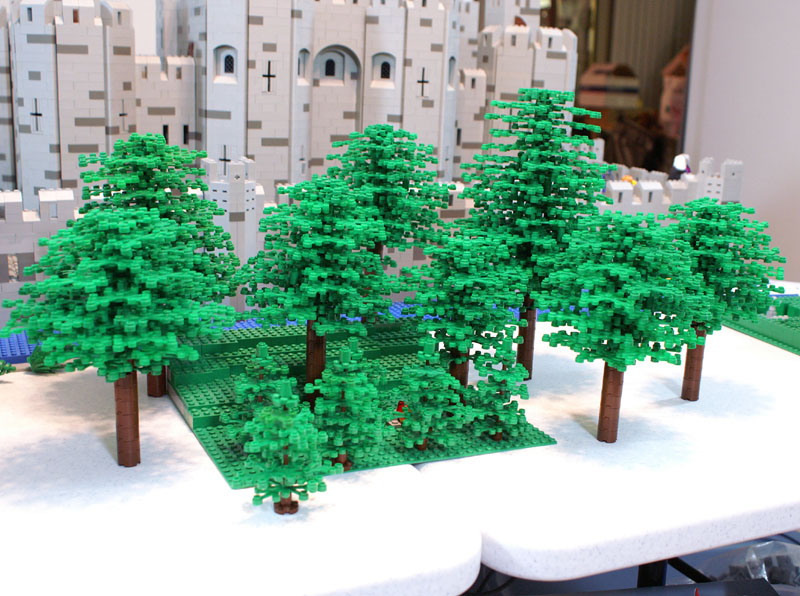
Now, tell me, what are the differences between this human-made lego tree and the one who created by our almighty creator,our god?

Showing posts with label Events. Show all posts

Tuesday, February 3, 2015

Flood Relief Project

31 January 2015 was really a tiresome day, but yet really meaningful to all of us, who joined the charity trip to Kuala Krai, Kelantan. Congrates to everyone who involved!

Flood Relief Project


To those who participate, sure it will bring back your memories of a whole day in one of the Malaysia's state, Kelantan in order to help the flood's victim psychologically as well as distributing items for their uses. The sight-seeing view over there was utterly different than what we might ever imagine of what happened to them. Now, we shall see how the real life at that place.

We departed from IMU Bukit Jalil around 8.30 pm on Friday, 30th January 2015 with a bus which came from IMU Seremban as it fetched the students from there as well. From IMU Bukit Jalil, alhamdulillah 16 students managed to volunteer themselves to participate in this charity trip. 4 girls and 12 boys. From here, this journey began...

The bus stopped at 11.30 pm in front of a restaurant 'Syed Bistro', and most of us grabbed their 'dinner' or supper there. We slept in the bus until we arrived at Hentian Gua Musang, a bus station in order to refresh ourselves by taking a bath, changing attire as well as grabbing a breakfast there. We were given about one hour for that purposes from 4.30 am to 5.30 am. Then, we departed again and stopped at in front of Masjid Laloh (mosque) around 6.50 am to allow those muslims performing their subuh prayer there. The school that we were going was already near from the mosque just about 100 metres. However, all the four lorries cannot proceed to the school to deliver tonnes of packaging, and thus all those items gathered in the mosque where we prayed in that morning. The process of unloading items began at that place.


Prior to that, as we arrived, we were quite surprised with the surrounding environment. A lot of house damaged. Some families cleaned up the mud at their house area. All the shops were in a big mess! and dirts everywhere. Besides, we also barely heard any vehicles' noises. we believed that most of the vehicles were impaired during the flood period.

this is what cooperation means...
Then, we started the unloading process as the lorries also arrived not long after we arrived. There were many items brought along such as toiletries, groceries, insect repellent, mineral water, cooking oil, and blankets. All of them packaged accordingly to ease distribution. In the morning, all of us unloaded all those things from the lorries, and seriously this part was the most tiring task of the day, same as when we loaded the things into the trucks and lorry.
These were all of the abundant items. Even the camera cannot cover it all!


Then, all of us went to Sekolah Kebangsaan Laloh which just about 100 metres distance by walking. In a hall, we saw all of the parents whose their children schooled there. There was a officiation ceremony which include short talks by the representative of each NGOs including one from IMU. The master of ceremony was Cik Sakinah, a medical student who currently in clinical years in IMU Seremban. She also led the games to entertain the children together with Ikhwan.


This is SK Laloh

Here, everyone was divided into distribution group and the group which entertained the children. Therefore, as they proceeded with the game parts. Most of us involved in the loading of the items into trucks and the lorry. The selected villages were Kampung Karangan, Kampung Lela Jasa, Kampung Pemberian, Kampung Manjur, and Kampung Laloh. Before lunch break and zuhur prayer, the items to be given to residents of Laloh were placed in the SK Laloh which transported from the mosque. Only then, all of us took a break to have a lunch and then, perform zuhur prayer and asar prayer (jama' takdim).

At first, the distribution team was divided according to designated villages, but at the end, volunteers were randomly selected for every trip in order to distribute the items. This part was the most interesting part! We could the real life and situation of living in the villages. It was really unexpected view.

Further down the road to enter those villages, we could see plants dying as if there was disastrous drought. The road seems quite silent as if there was no animals around, though we could find some only at certain place. A rubber estate all grew wihout leaves, except at the uppermost part. Trees' trunks were covered with dust from the dried mud of the recent flood. Not to mention, the route through the villages also covered with the dust, and worse when the dust flew up as we get through by the trucks. Our eyes strained very much as we attempted to avoid the dust from entering the eyes. Then, the skin started to feel uncomfortable as the dust irritate the skin very much, worsen by the low moisture.

In this environment, we cannot help myself except to have a mask or anything that can avoid the entry of dust into respiratory system, every time when the dust flew into the air. Other than that, it was fine without mask. But the children, boys kept playing football outside neglecting the dust flew up everywhere as they ran and kicked the ball as if it was nothing. They felt nothing about it. Are they actually, used to it? At nearby area where there was also boys playing outside, some of them asked one of us, if he could give mineral water t them. They asked for it, as if they really begging for it. Then, he just give a mineral bottle for each one of them.

The set of items distributed equally for each family, by groups. For instance, at this area, there were only 5 families, so, prepare those items and called each family to grab their items. Some families may need us to carry it for them to their 'house', since it was quite heavy actually. Some people (male) only wearing 'kain pelikat' to go outside.

"Maybe he doesn't have clean shirts." I think.

Many of the children also wore the old shirts, that I believed that they were dirtied by the mud of flood, though they were washed to be clean.

Along the way, we could also see many damaged houses and properties, as well as dirty shirts. Some families even only have tent for their family to pursue living. Some families were only living under part of the roof which didn't damaged completely, but only fell a bit onto the ground. They kept their family there, on the bare ground, covered with mat. Almost all the wooden house damaged utterly. Only brick houses that kept in structure though they also had damaged here and there.

The distribution continued until at the end of the villages, and we need to gather other remnants of items accordingly as fixed proportion for each family. Not many were left, since it was pre-determined its quantity after the survey beforehand.


Around 5.30 pm, all of us gathered again at our 'base' the mosque in order to have a headcounts, to ensure that everyone was there and safe. Only then, we cleaned up the mosque area as there was rubbish here and there after it became our 'base'. Thanks to Imam, and committee of the mosque because allowing us to make the mosque as our 'base'. We really glad that you permitted us to do so. We truly appreciated your kindness. May Allah bless all of you.

Before we were having a dinner, we cleaned ourselves first, taking a bath. The boys went to a mosque, 'Masjid At-Taqwa' . Meanwhile, the girls went to Ikhwan's house. At the mosque, it was quite unusal view, as the mosque also affected by the flood similar to Masjid Laloh, our base. Some part of the building damaged. Alhamdulillah, the carpet was replaced anew to allow jemaah performing their prayers comfortably.

Then, we had a dinner feast at Ikhwan's house! Ikhwan is a medical students who also currently in clinical years in IMU Seremban. The treat was really appetizing, and delicious! Thanks for the meal, Ikhwan! and his family!

We performed our maghrib prayer and isya' prayer (jamak takdim) in that mosque just right after we were having the meal.

We departed from Ikhwan's house around 8.30 pm. We slept along the way, and most of us, not even take a break at 'Syed Bistro', instead just sleeping. It was really a hectic and tiresome day. we were really lethargic after all that. We arrived at IMU Bukit Jalil at 4.30 am on the next day, sunday, 1 February 2015. Then, we went back to our house at vista.


Tuesday, December 9, 2014

Food For The Souls.

Food.

Food is something you eat, when you are hungry. Fill your stomache.

Something that provide essential nutrition for your body, nourish yourself for a healthy life.

When we talk about, 'food for the souls', what does it really means?
(I'm sure all of you already aware though. Never mind.)

It's a metaphor. literally, it is a spiritual nourishment.

It nourish your soul. Nourish your thought. Nourish your heart.

It makes you ponder of who you are, and what the reason that you born on this earth, for what purpose.

'Food For The Souls'.

Its something that you can 'eat' routinely anywhere and everywhere, resembles the food for you stomach. But, it nourish and fulfill you inner-self need, rather than physical necessities.

That's why, these theme has been brought further and chosen as one of a name for event conducted by Muslim Society, this year!

***

Food For The Souls


*note: the venue for 'entre' event is changed to IMU Driveway.

Below are some of general information regarding all the main speakers, that has been extracted from several reliable websites.


***

1. Ustazah Isfadiah binti Mohd Dasuki

  • Graduant of Bachelor (Hons) Revelation Knowledge Course with minor in Communication from International Islamic University Malaysia on the year 1994.
  • Complete her Master in Psychology course in Universiti Universiti Kebangsaan Malaysia (UKM) pon the year 1998.
  • She was ex-lecturer of Centre of Foundation Studies of  International Islamic University Malaysia, and served for 13 years since 2000 in Human Science and Revelation Knowledge Department. (Jabatan Ilmu Wahyu dan Sains Kemanusiaan (IRKHS).)
  • Qualified Religious Speaker of Jabatan Agama Islam Selangor and Qualified Member of Neuro-Linguisticprograming (NLP) Antarabangsa (2011), Certified Coach (2011), Certified  Time Line Terapi™(2011), dan Certified Professional Hypnotheraphist (2011).
  • Consultant for ‘Little Scientist’ Curriculum by Fun Science Enterprise which implement science experiment and Islam for the kindergarten children around the world since 2013.
  • Appearance in television such as TV Al-Hijrah in several segments especially in 'Assalamualaikum' segment to touch about parenting issues. and 'Cinta Ilmu' program. Also appeared in other TV channels such asTV9, TV3 and Astro Oasis as well as some radio channels.
  • Columnist in 'Berita Harian' for 'Parenting' segment.
  • Became one of the jury for the reality show in TV al-Hijrah ‘Solehah’
  • Now, Syariah Advisor of Brainy Bunch Islamic Montessori (BBIM), the combination of Montessori and Islam in early education of pre-schoool children and posted as Chief of Brainy Bunch International School.


***


2. Muhammad Syaari bin Abdul Rahman.

  • Graduant of Bachelor (Hons) of Arabic Literature and Languange from International Islamic University Malaysia, and now further his study of master level in the course of Ottoman History.
  • Chief Executive and full-time consultant in Ibrah Paradigm Training & Consultancy since May 2011.
  • Qualified Consultant under Human Resource Developmen Bhd. ( Pembangunan Sumber Manusia Berhad, PSMB.)
  • Experienced more that 4 years in training, motivational, and consultancy industry and he had served for 2 years in I.P Minda Training & Consultancy Sdn. Bhd.
  • Registered member under Training and Consultancy Association Muslim Malaysia.
    (Pertubuhan Perunding Latihan dan Motivasi Muslim Malaysia (TAMRIN).
  • Author of  a best-seller book. “Kuasa Kepemimpinan Al-Fateh” published by PTS Milennia.
  • Few television programme that he was invited before for interview session were TV Al-Hijrah in “Assalamualaikum” segment and RTM TV1 in “Amir Amira” segment.


***


3. Mohamad Ridhauddin bin Mohd Salleh
 

  • BA (Hons), Fiqh And Usul Fiqh, International Islamic University Of Malaysia (IIUM).
  • Acquisition editor, PTS Publications and Distributors Sdn. Bhd, June 2006- Disember 2006
  • Teacher, Setiabudi School Sdn. Bhd, January 2007- June 2007.
  • Lecturer, International Education College (INTEC- previously known as International Education Center), July 2007- 27 July 2011.
  • Publishing book entitle ” Demonstrasi BERSIH: Menilai Semula Pandangan Antara Mengharamkan dan Mengharuskan” published by Kolej Islam Darul Ulum (KIDU) on July 2012.
  • Publishing book entitle “Kerjasama Politik DAP PAS dan UMNO MCA: Menyingkap Tabir Kebenaran”.
  • Invited speaker in Rancangan Selamat Pagi Malaysia (SPM) RTM on the topic of “Kelesuan Mahasiswa; Apa penyelesaiannya, 8.00-8.30a.m.
  • Actively be the speaker for many talks, and events either in Malaysia or overseas.


Friday, December 7, 2012

Update - The Value of Youth: Priceless


Our new poster.


Updates on program details.


Friday, April 27, 2012

Fiqh Medic Part 2


Date        : 14th April 2012
Time        : 8.00am - 1.00pm
Place       : Lecture Theatre 2, IMU
Speaker  : Ustaz Ismat Nazirin bin Mat Isa 


This time, Ustaz will mostly discuss real cases from the website (www.e-fatwa.gov.my/). 

Q: What is the hukm of using ‘Maggot Debridement Therapy’ for patient with a chronic wound? (especially diabetic ulcer)
A: The Prophet Muhammad (salallahu alaihi wasallam) was once asked about the advisability of medical treatment. He replied, "Make use of medical treatment for Allah has not made a disease without making a cure for it, with the exception of one disease, namely old age." [Sunan of Abu Dawood, Hadith 1755] 

Hardship begets facility. Thus, this case falls under the category of Ja’iz or Mubah (Harus). The obedient act such as ablution and Salah performed by this patient while on treatment is valid. 

Q: Euthanasia or Mercy Killing. What is the hukm? 
A: Euthanasia is the act of intentional killing by act or omission of a dependent human being for his or her alleged benefit. Therefore its main hukm is Haram (prohibited or forbidden). A Muslim should never give up in seeking a method of recovery for his other brother; all means and methods that does not go against Syariah should be tried before giving up. Nevertheless, if a person is declared to be brain or any other organ failure (example: heart) and he/she has to be fully dependent on a machine to stay alive; all other doctors could not find other alternative treatment nor is there any hope for a living, then euthanasia is permissible by ceasing the lifeline with the machine. In order to do this, the doctor has to be fully competent and is confident without doubt of the decision he makes. 

“It is not for a believer to kill a believer unless (it be) by mistake. He who hath killed a believer by mistake must set free a believing slave, and pay the blood-money to the family of the slain, unless they remit it as a charity. If he (the victim) be of a people hostile unto you, and he is a believer, then (the penance is) to set free a believing slave. And if he cometh of a folk between whom and you there is a covenant, then the blood-money must be paid unto his folk and (also) a believing slave must be set free. And whoso hath not the wherewithal must fast two consecutive months. A penance from Allah. Allah is Knower, Wise.” 
(An-Nisa’: 92)

Anas (b. Malik) reported Allah's Messenger (may peace be upon him) as saying. None of you should make a request for death because of the trouble in which he is involved, but if there is no other help to it, then say: O Allah, keep me alive as long as there is goodness in life for me and bring death to me when there is goodness in death for me.
(Muslim :: Book 35 : Hadith 6480)

Q: What is the hukm of eating gecko-gecko lizard (Tokay) for the purpose of medicinal therapy? 
A: Haram because of the nature of the animal itself which is khabis (or abhorrence) and it may be poisonous. This lizard has not yet been scientifically proven to be of benefit to health. Once there are hard evidence based on research regarding the health benefit this lizard carries and then only the hukm would fall under Ja’iz or Mubah (Harus). 

Q: What is the hukm of donating an organ? 
A: Organ donation is permissible for a Muslim; though it is preferred that only the important organs (eg; liver, marrow, kidney) are to be donated and in any single body, it is advisable to take only one organ. The procedure is preferred to be handled by a Muslim doctor. Nonetheless, it is haram for a living Muslim to donate an organ whilst still alive and he/she actually requires that organ to live. There are exceptions to this case (for example in liver donation), as long as after the donation the donor must not suffer any chronic side effects that could cause death. 

Q: Can a Muslim donate his whole body after death for the purpose of research/study? 
A: Haram because there are lots of other death that can be used as research purposes instead. 

Q: Is autopsy allowed in Islam? 
A: Haram. Nevertheless, it is allowed in certain emergency (Dharurat) conditions and there is a need to ensure that the real cause of suspicious death can be brought to justice. This falls under the importance of the protection of life. 

Q: Can a male doctor attend to a woman in labour? 
A: The hukm is Ja’iz or Mubah (Harus) when it is an emergency situation. 

Q: Is In-Vitro Fertilization (IVF) allowed in Islam? 
A: The procedure is permissible as long as both the egg and sperm comes from legally married couple. 

Q: Is surrogacy allowed? 
A: Haram, as it might cause confusion in the lineage. 

Q: Is abortion of a disabled foetus allowed? (eg: Down Syndrome, congenital physical defect) 
A: Haram as the disability is a fitrah (disposition). 

Q: Are Muslims allowed to take medications, food, drinks, or use perfumes which contain alcohol? 
A: First of all, we have to bear in mind that all liquor is made from alcohol but not all alcohol is made into liquor. An alcohol is considered as haram as long as these two conditions is fulfilled:
i)   The level of alcohol is more than 0.5% 
ii)  The process of making the alcohol is from ensiled fruits. 
iii) The alcohol made is intended to cause a person to be drunk. 

In medication and perfumes, the alcohol used is mainly intended to be a solvent so that the whole formula is well incorporated. Therefore, it is not considered to be impure and it falls under the hukm of Ja’iz or Mubah (Harus). 

Q: Is the gelatin used in medication safe for Muslims to consume? 
A: The gelatin may come from many different resources such as bovine (cow), porcine (pig) or even avian (ducks). Therefore, only medication that has gelatin made from resources such as porcine is considered haram. Nevertheless, in times of emergency (Dharurat) and there are certainly no other medication left, then it is permissible or Ja’iz or Mubah (Harus) for a Muslim to consume it. 

Each hospital in Malaysia has its own responsibility to ensure that the medication that they ordered has to be free from any suspicious materials used and patient has the full right for information regarding the medication that they are taking. 

Q: What is the hukm of using highly purified insulin coming from a porcine source? 
A: In a critical diabetic emergency (Dharurat) case, it falls under the hukm of Ja’iz or Mubah (Harus). Nevertheless, a Muslim is obligated (Wajib and Fardh) to continue to search for other insulin medication that does not have any haram source in them. 


Ramadhan Guidelines for Patients 

Jau’f is defined as a passage that can transfer food or drinks (or any material that may nullify the fast) into the “al-mi’dah” (a reservoir or stomach) as that is the designated place where food substances is processed into products which benefits the body. In other words, it can also be denoted as inserting any items that can nullify the fast through a passage or cavity into the body. 


Acts which nullify the fast (for patient): 

1. Injecting substances which are considered as “food material” into the body. (eg: Glucose) 
2. Inserting any material through a passage into a cavity in the body (Jau’f) 


Acts which do not nullify the fast: 

1. Eye or nose drop (for medication purposes) 
2. Using an instrument to look into the throat provided that no “fluid” enters with it. 
3. Placing a medication underneath the toungue (eg: GTN for angina patient) 
4. Placing a medical instrument into the womb for the purposes of inspection or 
    treatment of a condition. 
5. Placing a medical instrument into the bladder for the purpose of treatment. 
6. Placing a medical instrument into the intestine for the purpose of inspection and 
    treatment (eg: colonoscopy provided that no “fluid” is entered into the site) 
7. Dental treatment (eg: removing tooth, plastering or cleaning) provided that no “fluid” is
    swallowed. 
8. Mouthwashing or spraying any medication into the mouth provided that no “fluid” is
    swallowed. 
9. Injection of intravascular (IV), intramuscular (IM) or subcutaneous (SC)medication is 
    allowed. 
10. Oxygen mask and nebulizer is allowed. For the usage of inhaler; there are two 
      schools of thought. Firstly, the act falls under the hukm of nullifying the fast because 
      some of the medication enters into the stomach and to certain extend can give 
      energy to the body. Secondly, the act does not fall under the hukm of nullifying the fast 
      because the main purpose of taking an inhaler medication is so that the medication
      would  majorly enter into the lung (with proper usage technique) and the minute 
      amount of medication which enters into the stomach does not provide the body
      energy during fasting. An individual is allowed to hold on to any one school of thought
      as both are generally accepted according to one’s preference and confidence. 
11. Anesthetic is allowed. 
12. Any medication/ creams / patches that are able to be absorbed into the skin is 
      allowed. 
13. Contrast material for angiogram purposes 
14. Biopsy provided that no “fluid” is entered into the site. 
15. Epidural injection (into the spinal cord) is allowed. 
16. Vomiting accidently does not nullify the fast. 
17. Hemodialysis does not nullify the fast. 


References

1.   Notes and Presentation prepared by Ustaz Ismat Nazirin bin Mat Isa 
2.   Al-Maqasid Al-Shari’ah (The Objectives of Islamic Law) wriiten by Mohammed 
      Hashim Kamali (a Professor of Law at the International Islamic University Malaysia) 
3.   Qawa’id Al-Fiqh (The Legal Maxims of Islamic Law) wriiten by Mohammed Hashim
      Kamali (a Professor of Law at the International Islamic University Malaysia)


Prepared by,
Saifullah
IMU Fiqh Medic 2012

Fiqh Medic Part 1


Date        : 30th March 2012
Time        : 8.00am - 1.00pm
Place       : Lecture Theatre 2, IMU
Speaker  : Ustaz Ismat Nazirin bin Mat Isa 


What is MAQASID SYARIAH (The Objectives of Islamic Law)? 


The main objective of Islamic Law is to “protect the benefit (of the individual and the community) and to facilitate the improvement and perfection of the conditions of human life on earth” that includes “eliminating prejudice, alleviating hardships and establishing justice”. The Quran and Sunnah is the perfect guidance to life in this world. From it, His Mercy and Compassion (Rahmah) is widely manifested in every word of the Quran and in every action of the Prophet saw. 


It is important for us to grasp the concept of the Maqasid Syariah as to ensure that all our actions and the decision we make is based on a firm understanding of the Syariah (Islamic Law) as implicated in the Quran and Sunnah. Allah does not create His Laws if not for the benefit of His Servants. 

The Classification of Benefit (Maslahah); Divisions of the Maqasid 

Firstly, the Daruriyyah (the essentials). “These are seen as absolute requirements to the survival and spiritual well-being of individuals, to the extent that their destruction or collapse would precipitate chaos and the demise of normal order in society”. In other words, the Islamic Law orders us to pay an extra attention towards 5 matters. These are: 

1. Faith (Islam) 
2. Life 
3. Intellect 
4. Lineage 
5. Property 

The calling for Jihad is an example of protecting our faith or religion whilst Qisas is a way for us to protect our life. Allah forbids us to drink liquor and take drugs as these acts puts our intellect at risk. Allah told us to stay away from any acts of adultery as to protect our lineage. He also forbids us to steal or look for income in the wrong way and this was all in order for us to protect our property in this world. 

The second benefit is known as the Hajiyyah (the complementary). These are the “benefits that seek to remove severity and hardship in cases where such severity and hardship do not pose a threat to the very survival or normal order”. One of the matters that falls under this category is rukhsah or concessions; which clearly reflects Allah’s Rahmah on His servants. A good example of this is the foregoing of fast by the sick or the shortening of Salah for the traveler. “A complimentary Maslahah may be raised to the rank of the essential Masalih (Daruriyyah) where it concerns the public at large, for example the shortening of Salah at battlefield.” 

The third benefit is the Tahsiniyyah (the desirable or embellishments) where there is “further refinement and perfection in the customs and conduct of the people, at all levels.” Good examples of acts are voluntary fasting and supererogatory prayers. 

It has to kept in mind though; in any event of contradiction between two Masalih, it is advisable to sacrifice the lesser benefit whilst assuring that prevention of evil is prioritized over the awareness of the benefit when making a decision. 


The Legal Maxims of Islamic Law (QAWA’ID FIQHIYYAH) 

1. Acts are judged by the intentions behind them (Al-umuru bi-maqasidiha): This is where Muslims are required to demonstrate consistency in faith and practice, and in words and deeds. The acts performed by two individuals may be the same, but the intention behind the act itself will determine its standing in Allah’s judgement. 

2. Harm must be eliminated (Ad-dararuyuzal): This is where unlawful acts are to be prevented irrespective of benefit. For example, a healthy person is prohibited to donate an organ (that he needs to survive) to other people while he himself is still alive. 

3. Certainty is not overruled by doubt (Al-yaqinu la yazulubish-shakk): Whereby the Islamic Law requires an individual to be firmly assertive in the act that he or she is performing as long as it is not against what the Quran and Sunnah states. 

4. Custom is the basis of judgement (Al-addatumuhakkamatun):Certain customary rules may be allowed provided that it is not contradicted with the Shariah, the act is current and is used predominantly by the people in that area. 

5. Hardship begets facility (Al-mashaqqatutujlab at-taysir): Islam is not a religion of burden; it encourages all Muslims to perform religious and righteous acts within his/her full capability. Though there are certain rules and conditions that must be followed of this relaxation in terms of difficulty or hardship (refer to Quran 2:173). 

The Declaratory Law or Secondary law in the USUL FIQH of Islam has many branches and two of them are Azimah and Rukhsah. Azimah is a strict general rule that has been imposed and Muslims are obliged to perform acts that fall under this category. For example, each Salah falls on its own specific range of time and Muslims are obliged to follow them accordingly. On the contrary, Rukhsah is a concessionary law whereby in specific conditions, Muslims are given exemptions or relaxation due to certain reasons. From the Quran, verse 2:185 clearly gives an example of how a certain obligatory act as a Muslim is given relaxation in performing it due to some impediment. 

As soon-to-be medical practitioners, we must always keep in mind that patients are in a state of emergency (Darurat), therefore certain obligatory acts has to be given some relaxation. This is clearly explained together with the fifth Legal Maxims of the Islamic Law; Hardship begets facility. 


The first FIQH MEDIC mostly discusses on various conditions which hinders the patient’s ability to perform a complete perfect ibadat; from the act of performing ablution to Salah itself. Here are some of the examples of cases: 

Q: The patient’s wounds are covered with a bandage at a site of ablution. How can the patient perform a perfect ablution? 
A: The patient should perform ablution normally and skip the area that is covered by bandage. Water should only reach areas of the skin which is visible. If patient is having a difficulty in performing ablution from a water tap, the medical practitioner may assist the process using a normal spray bottle. This is fairly helpful as the water for ablution would still be flowing on the skin and is able to cover a large surface area at any one time. 

Q: If a patient is having a colostomy bag (which contains his urine or feces), would the ablution be valid? 
A: Yes, as long as there is no leakage from the bag. Nevertheless, the patient has to ensure that the rest of his clothing is free of any excrement. A suspicious stain is considered as excrement if its colour, smell and taste is similar to a normal excrement. 

Q: If the patient is wearing clothes that has stains of blood and he has no other extra clothing, are his prayers valid? 
A: If the blood is still flowing, according to The Schools of Syafie, the patient has to stop the bleeding first, then, he or she may continue to pray or perform a new ablution. Though if the patient clearly has no other outfit, then he is allowed to pray in the outfit that he has on provided that it tallies with the requirement of the Islamic Law (not showing any aurat). 

Q: If the patient is not allowed to have water on his skin, how can he perform ablution? 
A: The patient is allowed to perform Tayammum or dry ablution using particles of dust or powder that is literally present on all flat surfaces. It is advisable to use a very fine powder that is visible with the naked eye. A burned patient for example need not have to perform any ablution and he may perform Salah even if some parts of is aurat is seen (as those burned skin cannot be covered with any cloth as it may further cause harm to the delicate skin). 

Q: What is the various position of Salah that is available for different conditions of patients? 
A: A patient capable of standing up should perform his Salah while standing up. If he is incapable to do so, then he may sit. If performing Salah by sitting is hard, then the patient should lie on his right side and pray. If all else fails, or the patient is unable to perform these positions of Salah, then he may lie flat on the bed and perform prayers. Nevertheless, Salah should be performed in a way that one is able differentiate between qiam, ruku’ and sujud. 

Q: If a women is in labour (bear in mind that giving birth to the first child can be as long as 19hours); can she still performs Salah? 
A: There are three types of bleeding (discharge) which makes it ‘haram’ for women to perform Salah. These are the haid (monthly menstrual period), wiladah (the blood that comes out with the baby) and nifas (the thick reddish blood discharge that comes out after labour). If there is any other blood than the ones stated; provided that the labour hours are long and the mother is able tolerate with the labour condition, then it is advisable for her to perform Salah. Nevertheless, if the mother is not in a state of clear thinking due to intense amount of pain, then it is forgiven for her as giving birth is also part of Jihad.


References


1.   Notes and Presentation prepared by Ustaz Ismat Nazirin bin Mat Isa
2.   Al-Maqasid Al-Shari’ah (The Objectives of Islamic Law) written by Mohammed
      Hashim Kamali (a Professor of Law at the International Islamic University Malaysia)
3.   Qawa’id Al-Fiqh (The Legal Maxims of Islamic Law) written by Mohammed Hashim
      Kamali (a Professor of Law at the International Islamic University Malaysia)


Prepared by,
Saifullah
IMU Fiqh Medic 2012

Friday, November 12, 2010

Jom Subuh

Assalamualaikum w.b.t


1. Early in the morning today, 12 November 2010, a group of us already 'officiated' the very first turn for this life long campaign. Insya Allah as we go along, we would like to hereby make this announcement and invite all of you to join this weekly 'fajr gathering.'

2. Let me divide this announcement today into 4 parts, so that you can at ease choose which one you would like to know and therefore read. First, is how is this going to be taking place. Second, some brief information about ayat of sujud tilawah. Third, the purpose of doing this. Fourth, busting the myths related to holding such a campaign.

3. FIRST: As a pilot project, we are going to start at Musolla Vista C first. A brother will be assigned to lead the Subuh (Fajr) prayer and recite any ayatul (verse) Quran that requires us to perform sujud tilawah. It is weekly on Friday and insya Allah at 6 am, unless upon significant change in prayer time. As simple as that. We are looking for an Imam at Musolla Vista B as well insya Allah. If any of you intend to volunteer, we really appreciate it and welcome you the most.

Note: Almost half of jemaah (congregation) that came today are from Vista B, and they are all Muslimah- a proof that with strong desire, nothing would ever come in our way to do things in the way of Allah and worship Him.

4.
SECOND: The above is the ayat for sujud tilawah. You can google on the internet for its meaning and also about when to recite it. Also, please take note that sujud tilawah is actually not wajib (compulsory) but is very strongly encouraged in Islam.

Quite basically, for our weekly Friday Subuh Prayer, we usually will recite surah Sajdah (chapter 32) until the 15th ayat, then we sujud (prostration) immediately (no ruku' and iktidal /no bowing and straightening up) and recite the ayat of sujud tilawah above (during prostration), before we raise again standing up straight so that Imam can continue the remaining of the surah. This is still considered the first rakaat. Next after is the usual flow of Subuh prayer we are familiar with ;-)

A simpler zikr such as subhanallah, alhamdulillah, Allahuakbar and lailaha illallah (one or all combined) can be an alternative to the ayat of sujud tilawah but let's put some efforts to memorize the very short ayat above, insya Allah.

5. THIRD: The purpose of doing this is very simple, the fact that Subuh prayer is the source of our strength as Muslims. More importantly, I personally believe that because we are students, we can gain spirit and energy to study by making it a habit to overcome the challenge and difficulties of waking up early during dawn.

We are all aware the fact that our enemies fear us not unless, we are strong enough to gather for Subuh prayer for congregrational prayer, like that we have for weekly Friday prayer (in terms of number of jemaah).

6. FOURTH: Everything should start slowly and regularly. Hence why we chose Friday as a start. We never intend to imply that we only have to wake up early on Friday alone. Insya Allah even everyday, there'll always be people in the surau for Subuh Prayer. So, please do come. At least as the first step, do wake up early and perform Solah ;-)

Insya Allah my best prayers to all of you brothers and sisters and please help spread the message. More importantly, please do join us, in rebuilding the strength of ummah. The world is getting old. Even if it's not, we are. Let's be prepared so long as we can still breathe oxygen in and out. ;-)

Wallahuaklam. Wassalam

MSOC Committee


Thursday, September 23, 2010

Welcoming Party 2010

Assalamualaikum w.b.t

As a means to welcome and show our kindness and hospitality towards the new brothers and sisters, we are now back with the annually organized welcoming party! Just this time around, the whole thing will be different! We welcome you, not only the juniors, but also seniors to come forward and say your opinions, even if you are not in the high-committee.

There will be small group discussions during the program that will not only allow better ice-breaking session, but also provide one of the many opportunities for seniors to share and juniors to ask, and for both to discuss and suggest activities MSOC can do or must do. We are turning MSOC into a more dynamic and vibrant club, perhaps better than any society ever exists in IMU, to involve more members of itself in the decision making.

Come and voice out your opinions! We welcome not only you, but you brain, of course!

Take care, and wassalam.

Thank you for reading =)